











Lying Perfectly Still, by Laura Fish
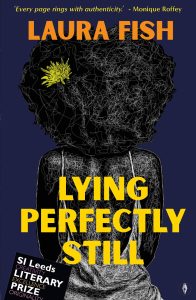 Laura Fish’s novel won the SI Readers’ Choice Award in 2022 and was subsequently published by Fly on the Wall Press.
It follows a young woman called Koliwe, as she travels to AIDS-ravaged Eswatini to take a job as an aid worker after the death of her father. The Southern Africa she encounters is a far cry from her father’s stories.
As she becomes enmeshed with Thandi, a local girl hiding a disturbing past, Koliwe feels increasingly split between her English identity and her rediscovered African roots. When Thandi goes missing, Koliwe’s search for truth leads her deep into the mountains, where harsh realities of wealth, poverty, tradition and modernity, clash.
You can read the opening extract of the novel here.
Reading group questions
1. How did this book expand or challenge your views on international aid and development work? Do you feel it is possible for Western aid organisations to have a profound and/or positive impact of the lives of people in developing countries?
2. In what ways did the aid organization for whom Koliwe/Xolile works fail to truly serve the local community? Where could they have made different choices?
3. How does this text present the disparities between the foreign aid workers and officials, and the people local to Mbabane? Were there any moments of true connection or understanding?
4. How do the Western aid workers, diplomats and government officials perceive the traditions and rituals of the Swazi people? Do you think this impacts, positively and/or negatively, the approach they take to development work and, if so, how?
5. Similarly, what is your perception of the rituals performed by the Dlamini family and other Swazi peoples, such as the funeral rites, Incwala and the sangoma? Why do you think they are still an important part of Southern African culture? How did they add meaning or purpose for the characters?
6. How do the themes of grief and guilt shape Koliwe/Xolile’s journey? How does she navigate these difficult emotions?
7. What differences stand out to you between Koliwe and Xolile? How did the protagonist reconcile those two sides of herself?
8. What do you think is the turning point in our protagonist’s understanding of her identity, ancestry and heritage? Why do you think reconnecting with her African roots is important for her?
9. From early in the narrative, an underlying mystery which haunts the text is Thandi’s whereabouts. Are you surprised by what happens to Thandi? Why or why not? Looking back, what foreshadowing was there?
10. What was your first impression of Cameron? How did this change as the novel progressed and why?
11. Does the ending bring a sense of justice or resolution for you? What would have been your ideal ending for Cameron? What do you think the reality is for those like Cameron in the real world?
12. What do you envisage Koliwe/Xolile’s future to be in South Africa?
13. Can insights be gained from experiencing others’ suffering through reading and engaging imaginatively, i.e. can the imagination be educated through reading literature? If so, is this a good thing?
14. Do individuals have a moral obligation and responsibility to hear the cries of another human being?
15. How might reading help us understand the wider complex moral questions of the past, present and future – pandemics, climate change, racial, gender and economic inequalities, the agony created by war and cruelty, and the atrocities which can occur when governments and political regimes create or fail to address human suffering?